Materials, Testing & Compliance
For importers, wholesalers and distributors, useful evidence must match the product being purchased. Start with the plywood report below, then confirm the material records and any testing needed for your selected models and destination.
The plywood report available to review
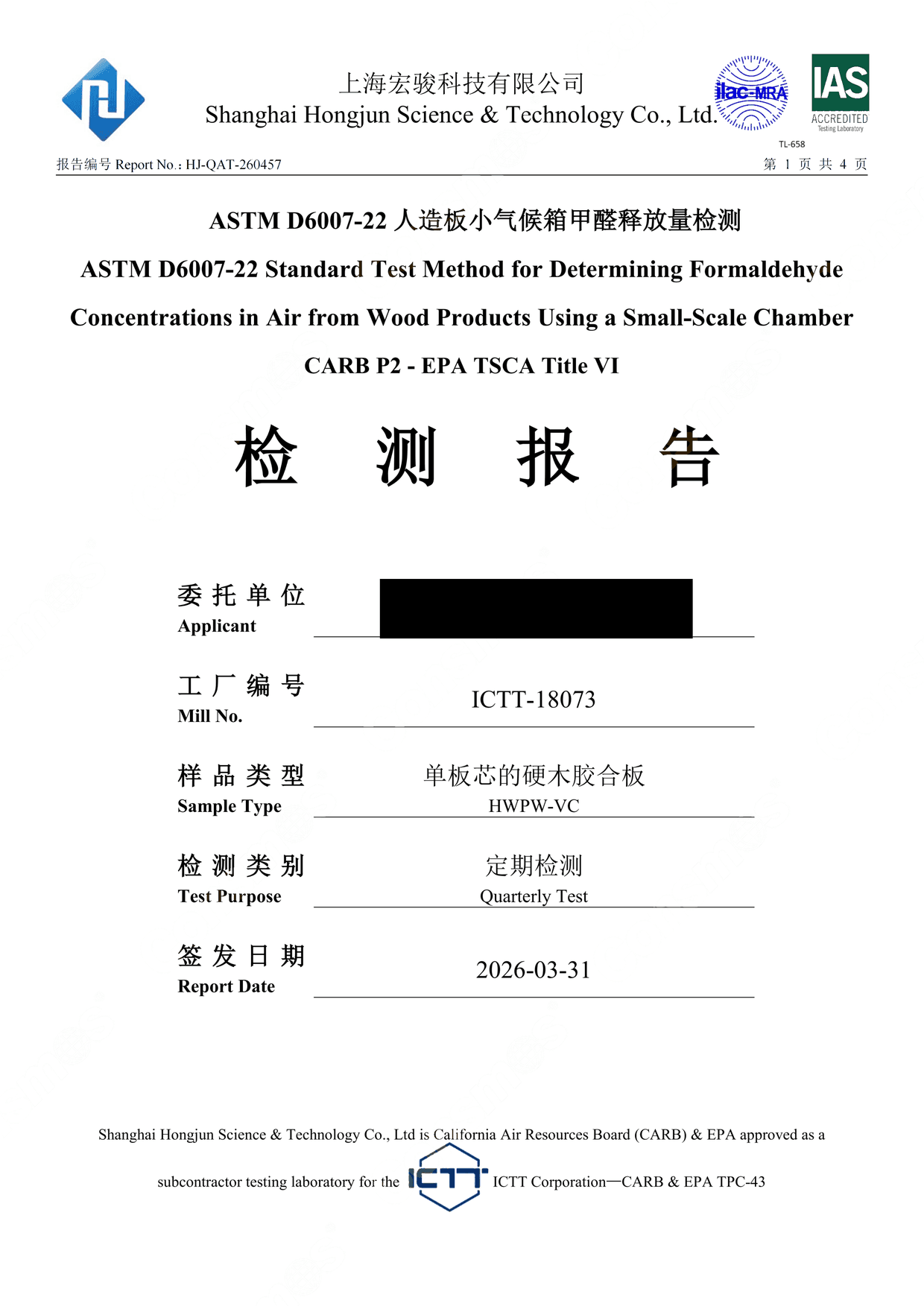
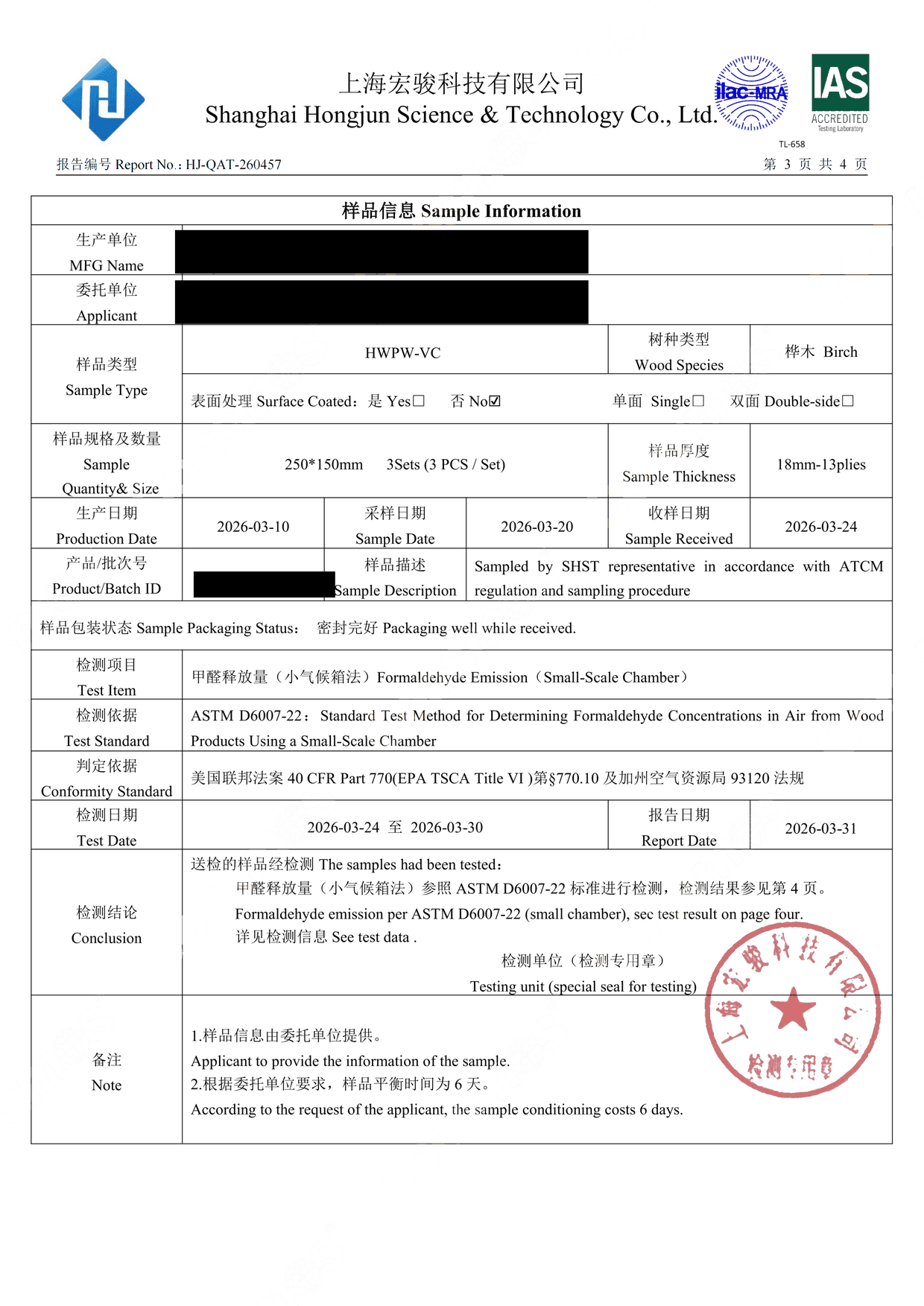
The displayed report from Shanghai Hongjun Science & Technology Co., Ltd. (SHST), dated 31 March 2026, records a formaldehyde test on uncoated plywood samples. It identifies the test purpose as quarterly testing. The table summarises what those pages record.
| Report reference | HJ-QAT-260457 (31 March 2026) |
|---|---|
| Tested material | HWPW-VC; species recorded as birch; 18 mm, 13 plies; surface uncoated |
| Method | ASTM D6007-22 small-chamber formaldehyde test |
| Sample dates | Produced 10 March; sampled 20 March; received 24 March; tested 24–30 March 2026 |
| Three results | 0.040, 0.038 and 0.038 ppm |
| Reported average | 0.039 ppm, compared with the report's stated 0.05 ppm limit |
These are sample results. They do not establish the same result for 15 mm panels, a different material source, coatings, solid-beech furniture or every finished model and future shipment. For an order, match the selected specification and production records to the evidence being supplied. A shared thickness alone is not enough.
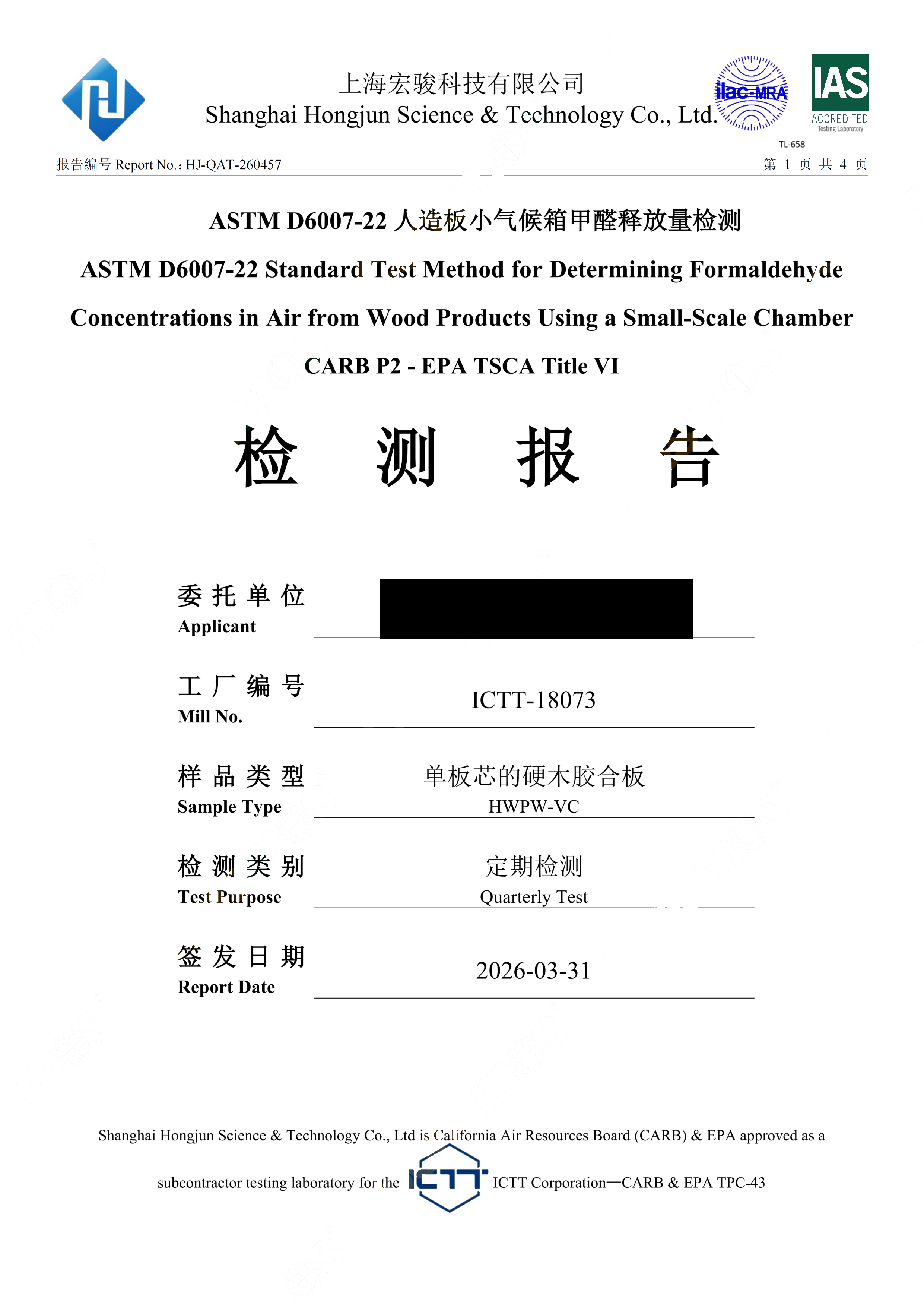
Report cover · page 1 of 4
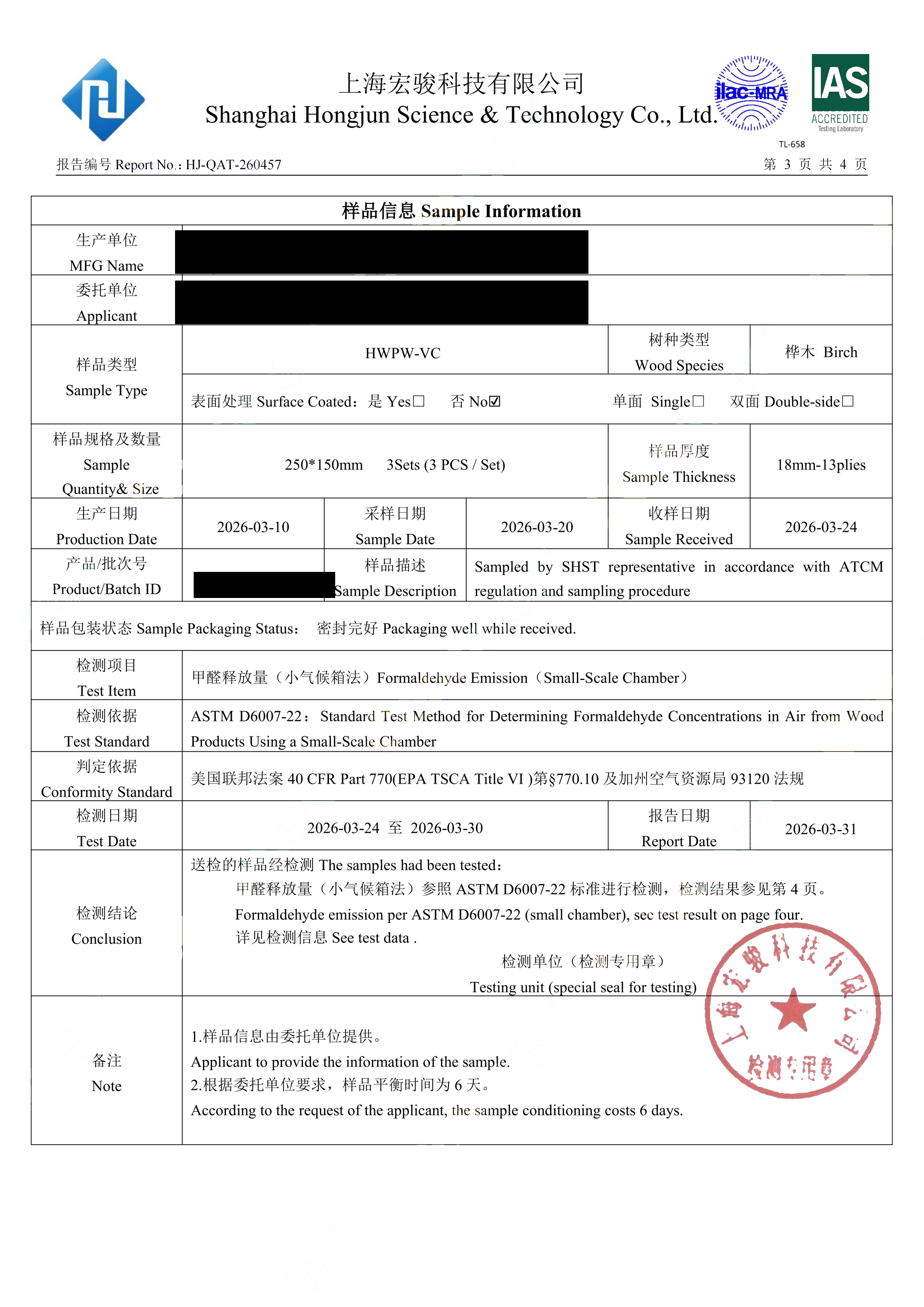
Sample information · page 3 of 4
Test results · page 4 of 4
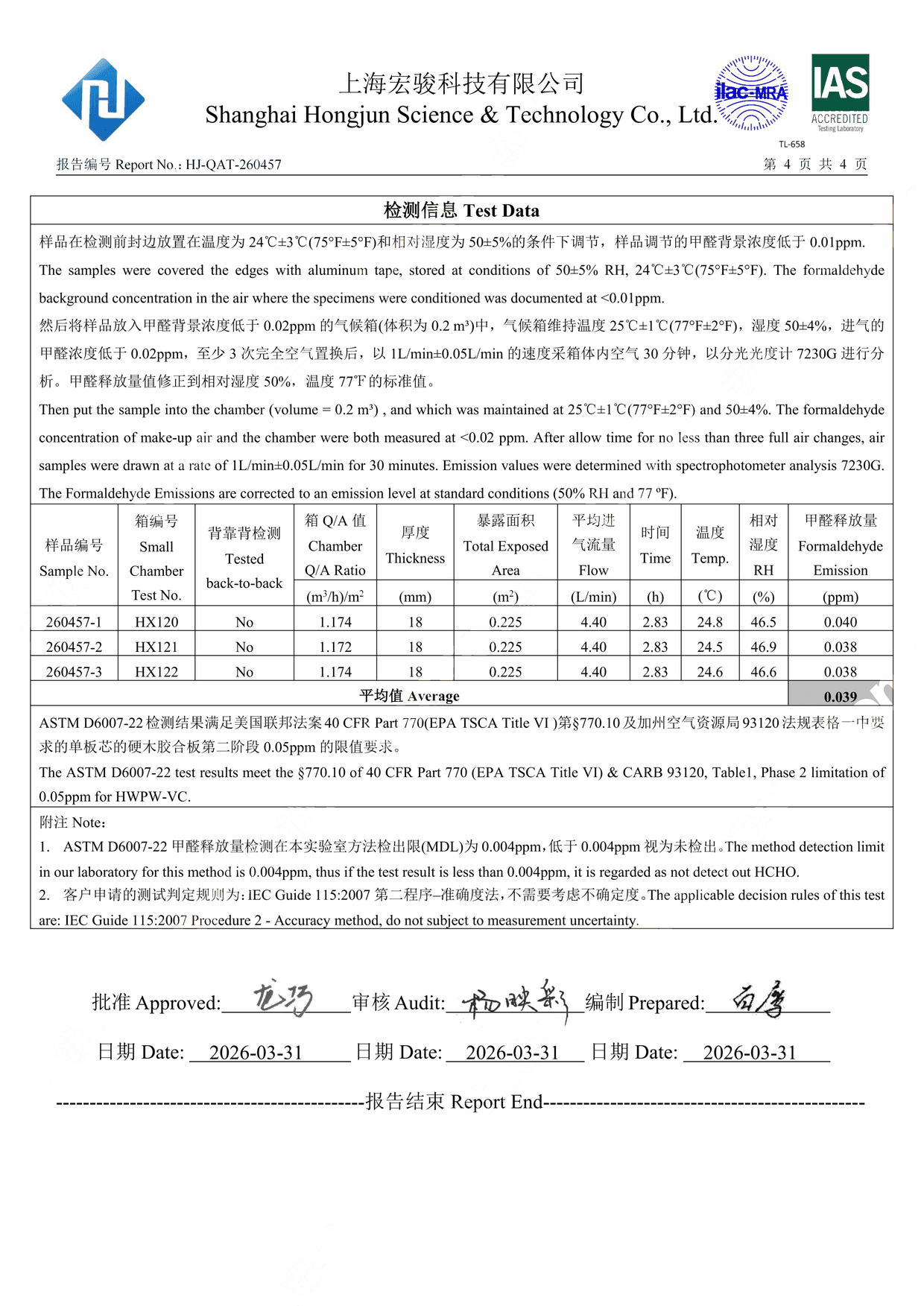
Three pages of the four-page report are displayed here, with supplier details masked. Request the complete report for a purchasing review and use the issuing laboratory to check authenticity. A certificate register checks a different record; it does not authenticate this test report.
Build the evidence pack for your order
A material report, a supplier certificate and a finished-product test answer different questions. Agree which records your purchasing team needs and confirm their availability before relying on a catalogue claim.
Model and material
Record the SKU, dimensions, panel thickness, construction, finish and intended use. Identify whether the evidence concerns a raw panel, a component or the assembled furniture.
Supplier documents
Check the certificate holder, product scope, status and supporting purchase records. Supplier certification alone does not establish an FSC claim for MJK finished goods; confirm any required claim and transaction documentation before quotation.
Order traceability
Match the quoted materials and relevant production lot to the supporting records. Ask which configurations a test covers and whether a design or material change requires further assessment.
FSC chain of custody follows eligible materials through production and distribution; it is separate from emissions or furniture safety testing. See FSC's chain-of-custody guidance for the distinction between supplier evidence and finished-product claims.
Agree additional testing before ordering
Share the destination, buyer requirements and selected configuration so that order-specific testing can be discussed. The scope may involve materials, finishes or assembled furniture; one panel test cannot answer all of these questions.
The quotation should confirm the laboratory, applicable method or standard, samples and their selection, cost allocation, timing and report addressee. Laboratory acceptance and the agreed test scope come before a commitment to a particular report.
Review the completed results against the agreed scope. A report addressed to the buyer can support its records, but the name on the report does not itself establish compliance or guarantee customs clearance.
Choose requirements by product and destination
- US composite wood: TSCA Title VI covers specified composite-wood panels and includes obligations for finished goods containing them, such as sourcing, records and labeling. Check the EPA guidance for the applicable role and construction.
- US children's products: Intended age and design affect classification. CPSC's children's-product guidance explains that distinction. ASTM F963 is a toy standard; ordinary furniture is generally excluded except toy counterparts, as described in CPSC's toy guidance.
- AU/NZ educational furniture: AS/NZS 4610 addresses tables, chairs and storage furniture, including strength, durability and stability. Confirm the applicable part, edition and model scope; the Standards Australia overview explains the series.
- EU/EEA substances in articles: Furniture may be affected by REACH obligations. Confirm the material information needed by the importer using ECHA's REACH guidance; finished wood furniture is not categorically excluded.
Questions from purchasing teams
Does the 0.039 ppm result cover my order?
It describes the samples in the SHST report dated 31 March 2026. Check your selected panel, source and production lot against the relevant records. The result does not automatically cover another thickness, finish, solid-beech product or finished furniture model.
Does this report establish E0, Super E0 or finished-product certification?
No. It records an ASTM D6007-22 plywood emissions result. A different emissions classification or finished-product requirement needs its own applicable evidence; this number alone does not establish those claims.
How can an importer check a report or supplier certificate?
Request the complete document and match the holder, material or model, method, date and scope to the order. Ask the issuing laboratory to authenticate a report. Use the relevant certification register to check certificate status; a register entry alone does not prove shipment coverage.
How is order-specific testing arranged?
Discuss the destination, product configuration and required evidence before confirming the order. The quotation should identify the agreed laboratory, test scope, sample selection, cost, timing and report addressee. A proposed test is not a completed result or a guarantee of customs acceptance.
Discuss your document requirements
Send your selected models, destination and required evidence with the purchase brief. We can then discuss the documents available and the scope to confirm for your quotation.