Reviewed 5 October 2026: hardware materials, performance wording and wholesale buyer checks.
The buyer question behind this article
An Australian buyer once sent me photographs of plastic connector inserts from a previous supplier and asked whether we used metal. The photographs raised a useful sourcing question, but they did not establish the performance of either supplier's furniture.
For an importer or distributor, the useful answer is a clear component specification backed by information for the product being ordered. That is the approach behind how we work with buyers.
What MJK specifies
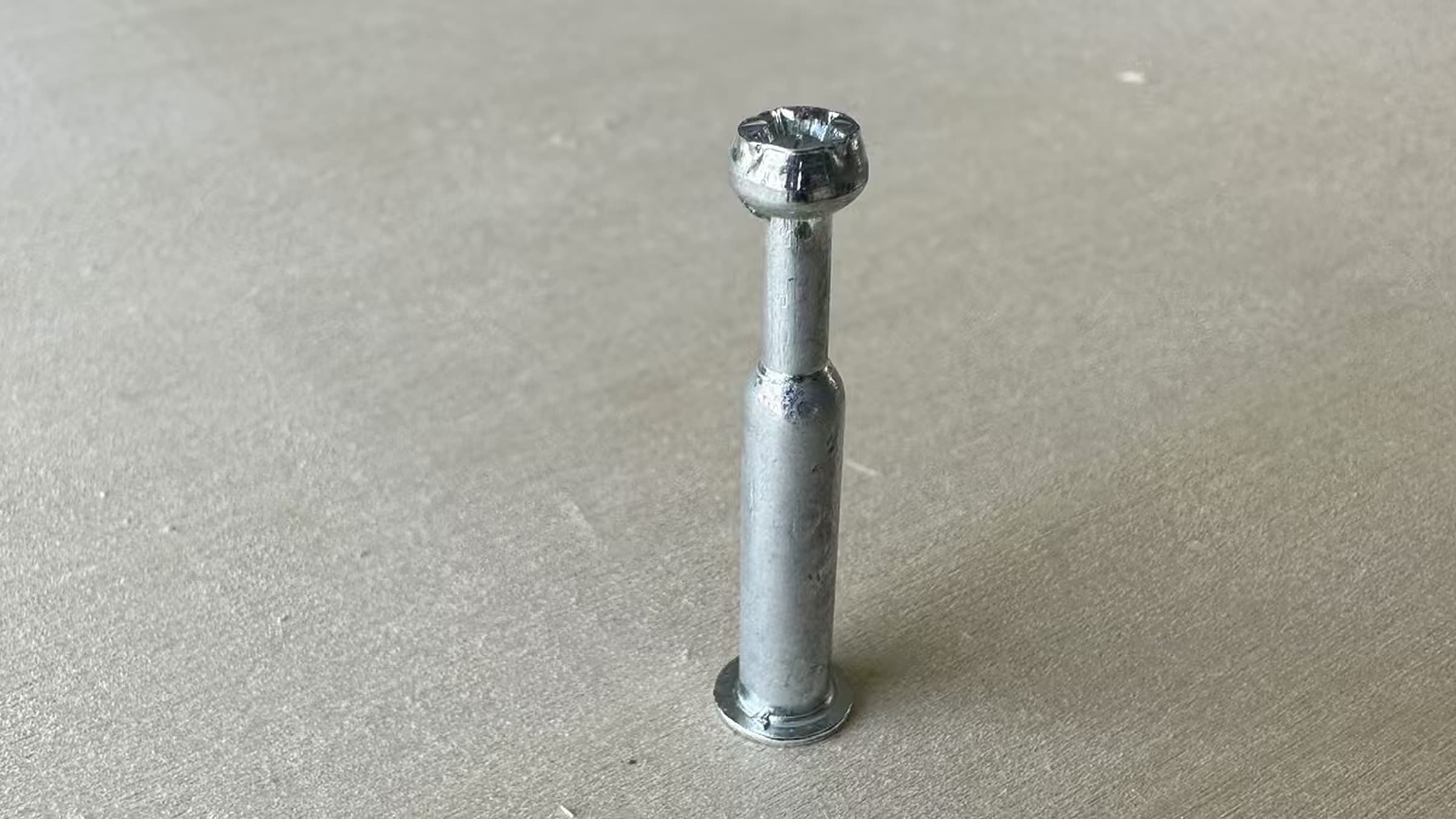
MJK furniture ships knock-down (KD), or flat-packed, by default. Our standard connection uses metal insert nuts and machine bolts, specified as zinc-plated steel, not stainless steel.
A machine bolt threads into the insert fitted in the timber or panel. Our solid beech chairs, shown in the tables and chairs range, also use this type of connection.
Confirm the selected model and approved hardware specification in the quotation and assembly information, especially when requesting a custom configuration.
What the material description does not establish
A metal insert does not, by itself, establish the load capacity, stability or service life of the assembled furniture. It also does not establish how many times a particular joint can be dismantled and rebuilt.
If repeat assembly matters to your distribution or installation process, make it part of the enquiry. Ask what testing or other evidence is available for that model, material and connection. Do not treat a close-up photograph as a substitute for the agreed evidence.
We do not describe zinc-plated steel as stainless steel or claim that the two have equivalent performance in every environment. Tell us about the intended location and cleaning conditions so that suitability can be reviewed against the specification.
Children climbing or hanging on shelves should not be presented as an approved use of a storage product. Review the intended use, installation information and applicable warnings for each model. Our materials and certification page explains the documentation route; confirm which documents apply to the product being quoted.
Four checks before approving a wholesale order
-
Identify the connection. Request the selected model number, insert and bolt specification, material and finish, plus model-labelled close-up photographs or a drawing. Check that the approved sample and order specification refer to the same connection.
-
Review the assembly information. Ask which instructions, hardware list and tool information are available. If your customer will assemble the furniture, agree the language and document version that will accompany the order. Confirm any maintenance or reassembly instructions rather than inventing a tightening schedule.
-
Match evidence to the requirement. State the intended use and destination market. If you need evidence for load, stability or repeated assembly, agree the model, configuration, test scope, acceptance criteria and who arranges it before approving production. A board-emissions report does not answer a joint-strength question.
-
Agree the packing and receiving check. Confirm how the hardware is identified and packed with the correct model, and what your receiving team should check against the packing list. Ask how missing or damaged components would be handled; do not assume a spare-parts quantity or service promise that is absent from the quotation. See our packaging and container-shipping guide.
Frequently asked questions
Are your insert nuts stainless steel? No. The specified material is zinc-plated steel. Confirm the hardware specification for the model in your quotation.
Are plastic inserts always unsuitable? A material name alone does not establish whether a joint is suitable. MJK specifies metal insert nuts and machine bolts; buyers should evaluate the selected product against its intended use and supporting evidence.
Can I see the actual part before ordering? Request model-labelled photographs or a video check. The timing and parts available to show are confirmed when arranging it.
How is MJK furniture supplied? KD is our standard supply format. Compare carton dimensions, gross weight and assembly requirements for the quoted configuration when planning freight and receiving. Pre-assembly can be reviewed at the quotation stage, case by case. Our lead-time guide explains production and shipping planning.