The short answer
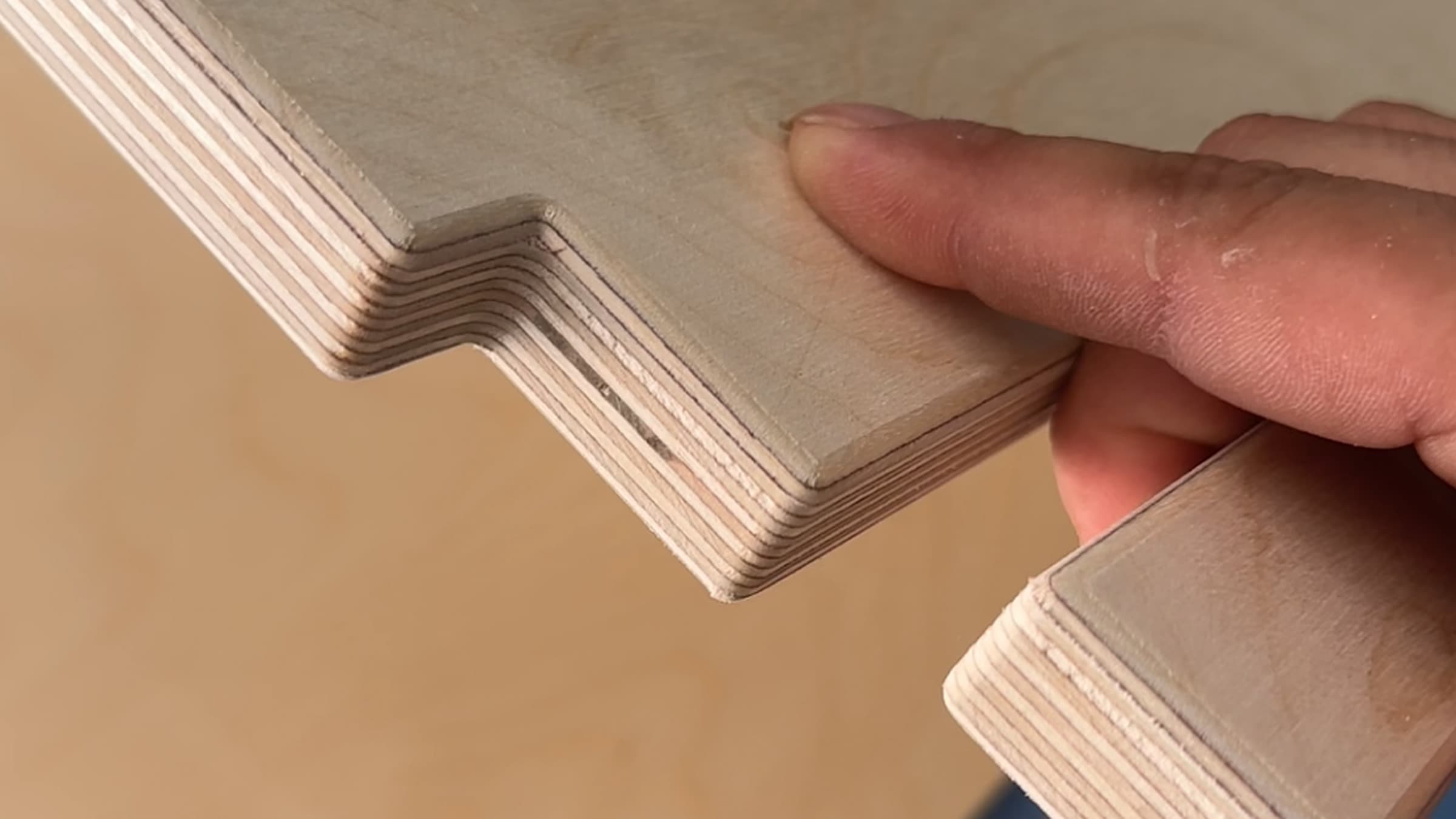
AS/NZS 1859 does not cover plywood. It is the standard family for reconstituted wood-based panels — particleboard (AS/NZS 1859.1) and MDF (AS/NZS 1859.2) — which are made by pressing wood fibres or particles together with resin. Birch plywood is a completely different product: layers of real wood veneer cross-bonded so the grain alternates direction. It sits outside AS/NZS 1859 entirely.
So when a supplier tells an Australian or New Zealand childcare buyer that their birch plywood is "compliant with AS/NZS 1859," they are citing the wrong standard. We can say this plainly because we once made the same mistake ourselves — and corrected it. More on that below.
What AS/NZS 1859 actually governs
The AS/NZS 1859 series is written for reconstituted panels: material broken down into fibres or particles and then reformed under heat and pressure. AS/NZS 1859.1 covers particleboard; AS/NZS 1859.2 covers MDF. These are engineered panels held together with resin throughout their thickness, which is exactly why their formaldehyde behaviour is regulated the way it is.
Plywood is not reconstituted. It is thin sheets of solid wood veneer, cross-laminated. That structural difference is the whole reason 1859 does not apply to it.
Where plywood emissions are actually defined
Plywood emission classes — Super E0, E0, and E1 — are defined under AS/NZS 2269, and the test method is the desiccator method in AS/NZS 2098.11. That is the correct home for a plywood emissions claim.
Citing AS/NZS 1859 for plywood therefore means one of two things: either the supplier does not understand which standard applies, or the standard is being stacked onto the product to make it look compliant. Neither is a good reason to trust the number attached to it. If you want to understand the wider material picture, our comparison of plywood, MDF and solid wood walks through where each one belongs, and what "birch plywood" actually means explains why the core and face grade matter as much as the species name.
Our own correction
Here is the part most suppliers would never publish. An earlier version of our own site cited AS/NZS 1859 in the wrong place. When we understood that 1859 governs reconstituted panels and not plywood, we zeroed it out across the whole site and moved to the correct AS/NZS 2269 framing.
We think publishing our own mistake is the point, not an embarrassment. Verifiability means you can check what we say — including when we were wrong before. A supplier that only ever shows you a clean story, with no traceable numbers behind it, is asking you to take everything on faith.
The honesty boundary — which is itself information
This is where we draw a hard line that a lot of suppliers won't. Our measured emissions data comes from an ASTM D6007-22 small-chamber test (report HJ-QAT-260457, SHST laboratory), showing 0.039 ppm. That is a small-chamber result under a US method — it is not an AS/NZS 2098.11 desiccator test.
So we do not claim "meets AS/NZS 2269 E0," and we do not claim "Super E0." We tell you the method we ran and the number we measured, and we let you compare. You can see the full breakdown of that result in the formaldehyde report you can verify yourself, and the underlying reports and certifications on our materials and certification page. A supplier willing to say "we did not run that specific test" is, in our view, more trustworthy than one who simply stamps a grade label on the product.
How to tell a real emissions claim from standard-stacking
A real emissions claim names the standard that actually applies to the material in question, and it can produce a report showing the method, the exact panel tested, and the ppm figure against a stated limit. Standard-stacking, by contrast, tends to list impressive-looking standard numbers — including ones that don't govern the product — without a matching report you can read.
The next time a supplier tells you their plywood is "AS/NZS 1859 compliant," you now know enough to ask the better question: which standard actually covers this, and where is the report?
If you'd like to see the actual report behind our own numbers, or talk through which standards apply to a specific panel, get in touch — we're happy to send the documentation over.
Frequently asked questions
Does AS/NZS 1859 cover plywood?
No. AS/NZS 1859 covers reconstituted panels — particleboard (1859.1) and MDF (1859.2). Birch plywood is cross-bonded real-wood veneer and sits outside it. Plywood emission classes are defined under AS/NZS 2269 instead.
A supplier says their plywood is "AS/NZS 1859 compliant" — what does that tell me?
Most likely they have applied the wrong standard. Ask instead for the AS/NZS 2269 emission class, or for an actual test report that names the method and the ppm result for the panel in question.
Does MJK's birch plywood meet AS/NZS 2269 E0?
We have not run the AS/NZS 2098.11 desiccator test, so we do not claim that grade. We hold an ASTM D6007-22 small-chamber report at 0.039 ppm and describe the result by method comparison rather than by a grade label.
What emissions report should I ask any supplier for?
One that states four things: the laboratory name, the test method (small-chamber or desiccator), exactly which panel was tested, and the ppm figure against a stated limit.